
How Oil Is Affecting Precious Metals
Learn how the war in Iran has set off a chain of events, with soaring oil prices driving higher inflation expectations, lower rate cut odds, and a correction in precious metals.

On Tuesday, I published a report on how, since the Iran war began a month ago, the U.S. dollar has increasingly traded like a petrocurrency, meaning a currency of an oil-exporting nation whose value fluctuates in tandem with global oil prices, and the dollar’s recent strength has been one of the reasons for weakness in precious metals. In today’s report, I explore a similar topic, focusing on how the surge in oil prices is increasing inflation expectations and what that means for precious metals.
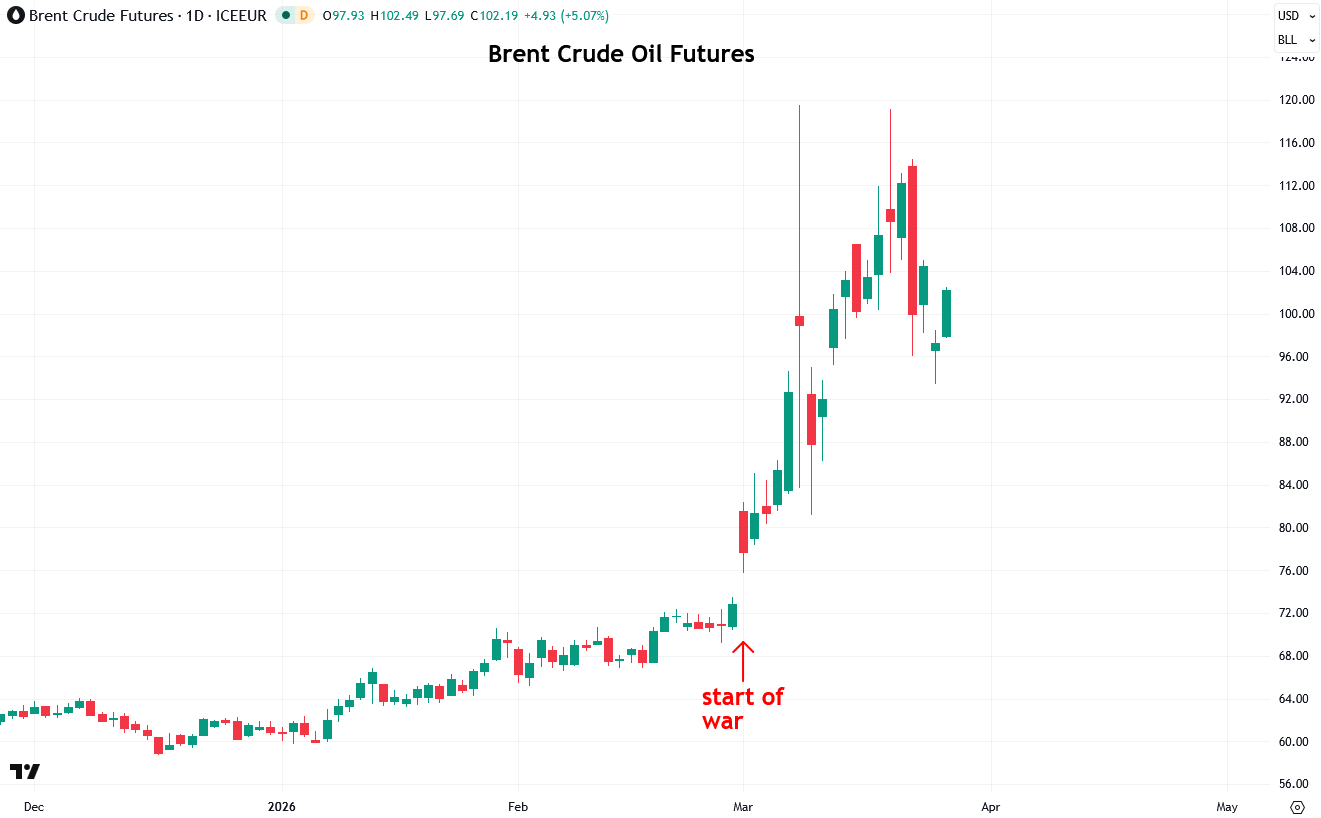
Let’s start by looking at the chart of Brent crude oil, the international benchmark for crude oil. As you can see, since the start of the war on Iran a month ago, Brent crude has surged by approximately $30 per barrel, or 42%, and is now over $100 per barrel. At its most extreme in recent weeks, however, it was as high as nearly $120 and has since come off those highs due to expectations of a ceasefire.
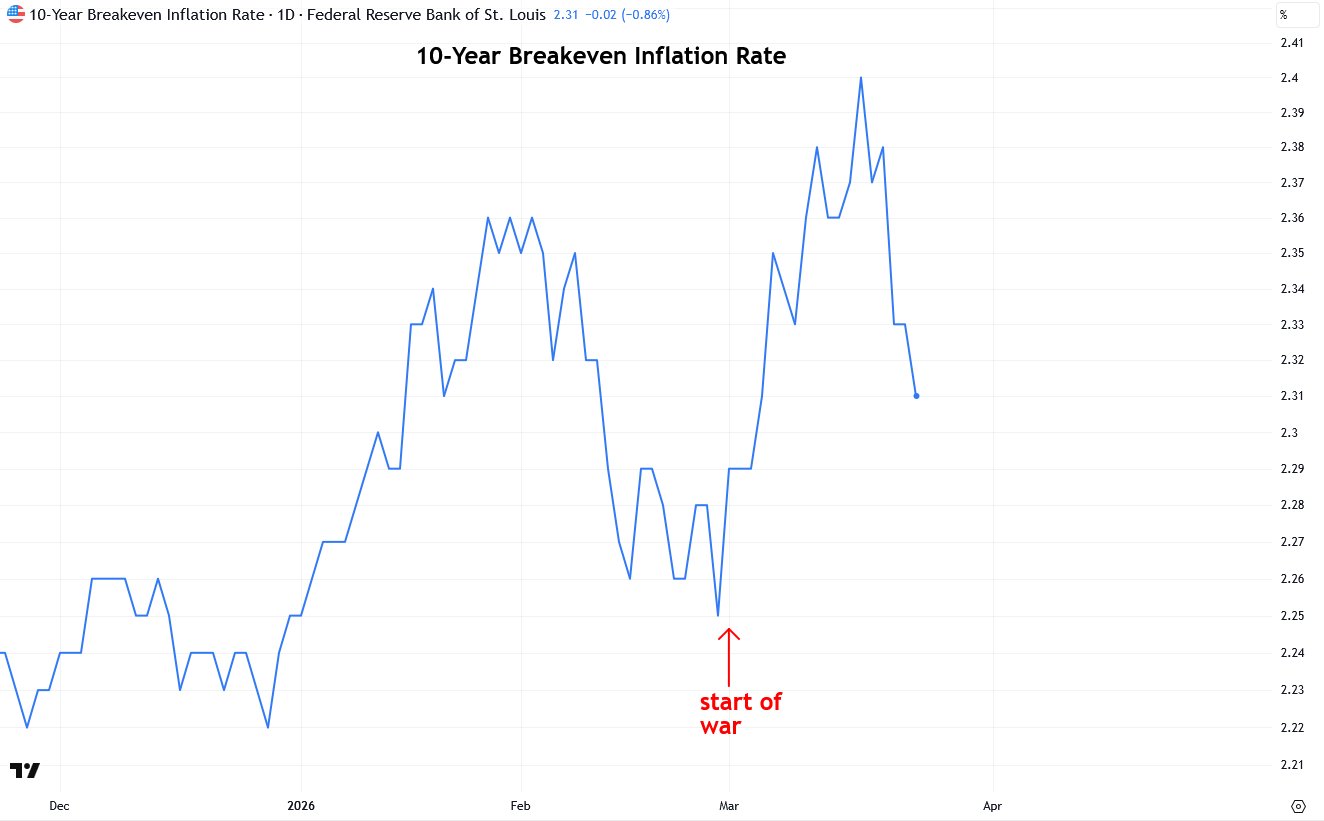
Next, let’s look at the 10-year breakeven inflation rate, a commonly referenced indicator of inflation expectations. It is calculated as the difference in yields between 10-year nominal Treasury bonds and 10-year Treasury Inflation-Protected Securities (TIPS), indicating the expected average annual inflation rate over the next decade.
The chart clearly shows that inflation expectations surged at the start of the war roughly a month ago due to the rise in crude oil prices, though it has since eased somewhat as oil prices have fallen:
Next, let’s look at a chart of Brent crude oil alongside the 10-year breakeven inflation rate so you can see how they have traded in lockstep since the war began, with both surging in the first few weeks and then pulling back on hopes of a ceasefire: