

It’s time for a midweek precious metals update, and this is an exciting one because the entire precious metals complex surged today after the U.S. Department of the Treasury announced that it would ramp up its Treasury bond purchases in an effort to keep yields down following their recent spike. Spot gold surged 4.35%, or $188 per ounce, to close at $4,523, its highest level since late May, while silver jumped nearly 6% to close just under $67. Gold and silver miners performed even better, soaring roughly 10%.
While the day started out normally, precious metals and miners exploded higher beginning at 8:30 a.m. EST after U.S. Treasury Secretary Scott Bessent announced that the Treasury would double its liquidity-support buybacks of 10- to 30-year securities from $2 billion to at least $4 billion per operation. With nine operations scheduled this quarter, that represents a minimum increase of $18 billion per quarter, or $72 billion annually, bringing total long-end buybacks to at least $144 billion per year.
While I will get further into the implications of this announcement, I first want to explain why the Treasury decided to increase its bond purchases in the first place: the recent surge in U.S. Treasury yields to their highest levels in two decades, driven by higher inflation resulting from the Iran war and ensuing surge in energy prices.
The recent increase in Treasury yields poses a major threat to the economy and financial markets, as well as to the U.S. federal government, whose national debt officially hit $40 trillion today. Annual interest payments on that debt have also reached an all-time high of $1.25 trillion, doubling in just five years, and the burden will only grow worse if Treasury yields remain at these levels or climb even higher (which I believe is inevitable).
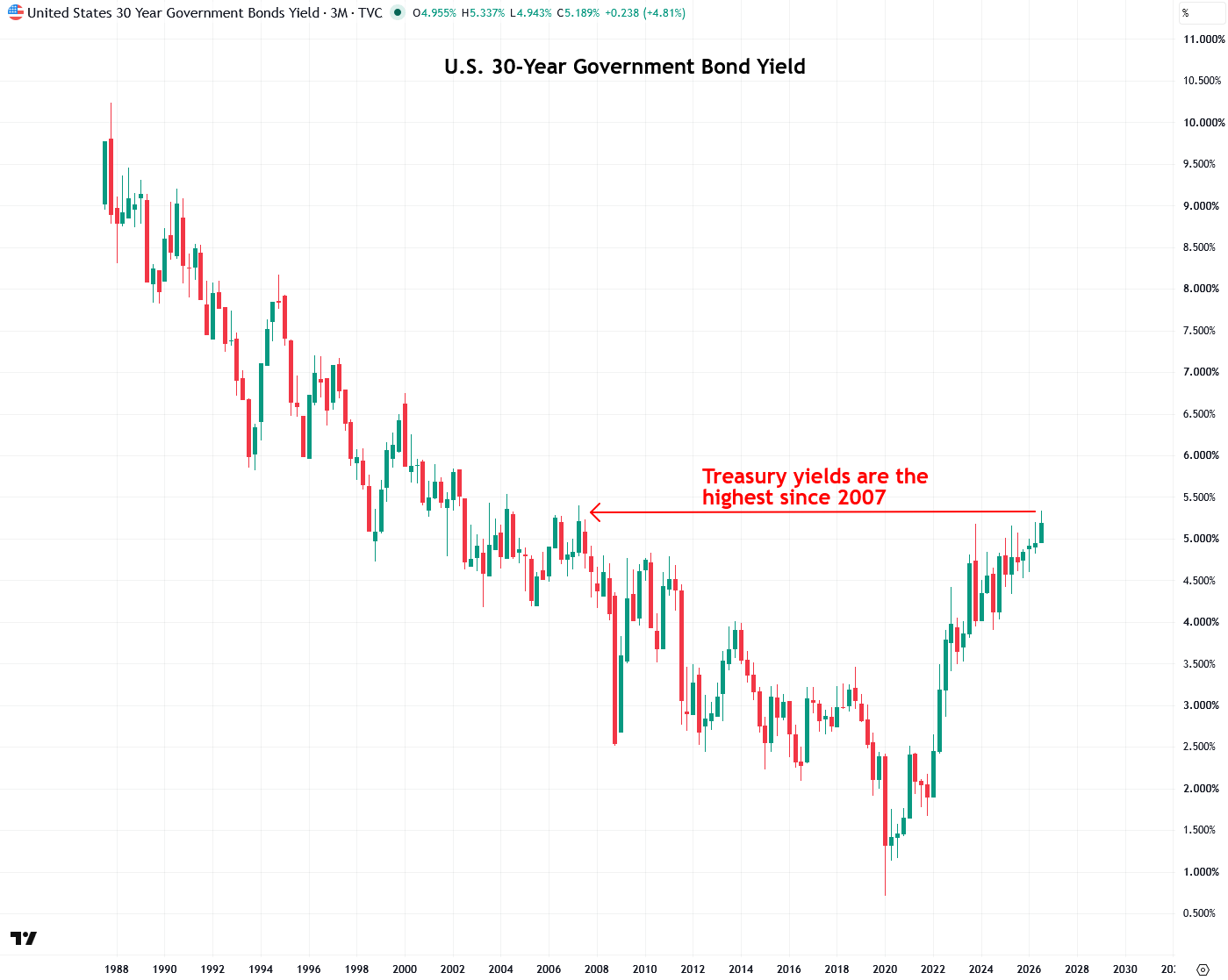
The immediate effect of the Treasury’s announcement was to push the 30-year Treasury yield down from roughly 5.3% to 5.19%, reversing the increase of the past week. However, yields remain at elevated levels, and it remains to be seen whether this initiative can successfully stave off further increases, let alone reverse the sharp rise of the past few months.
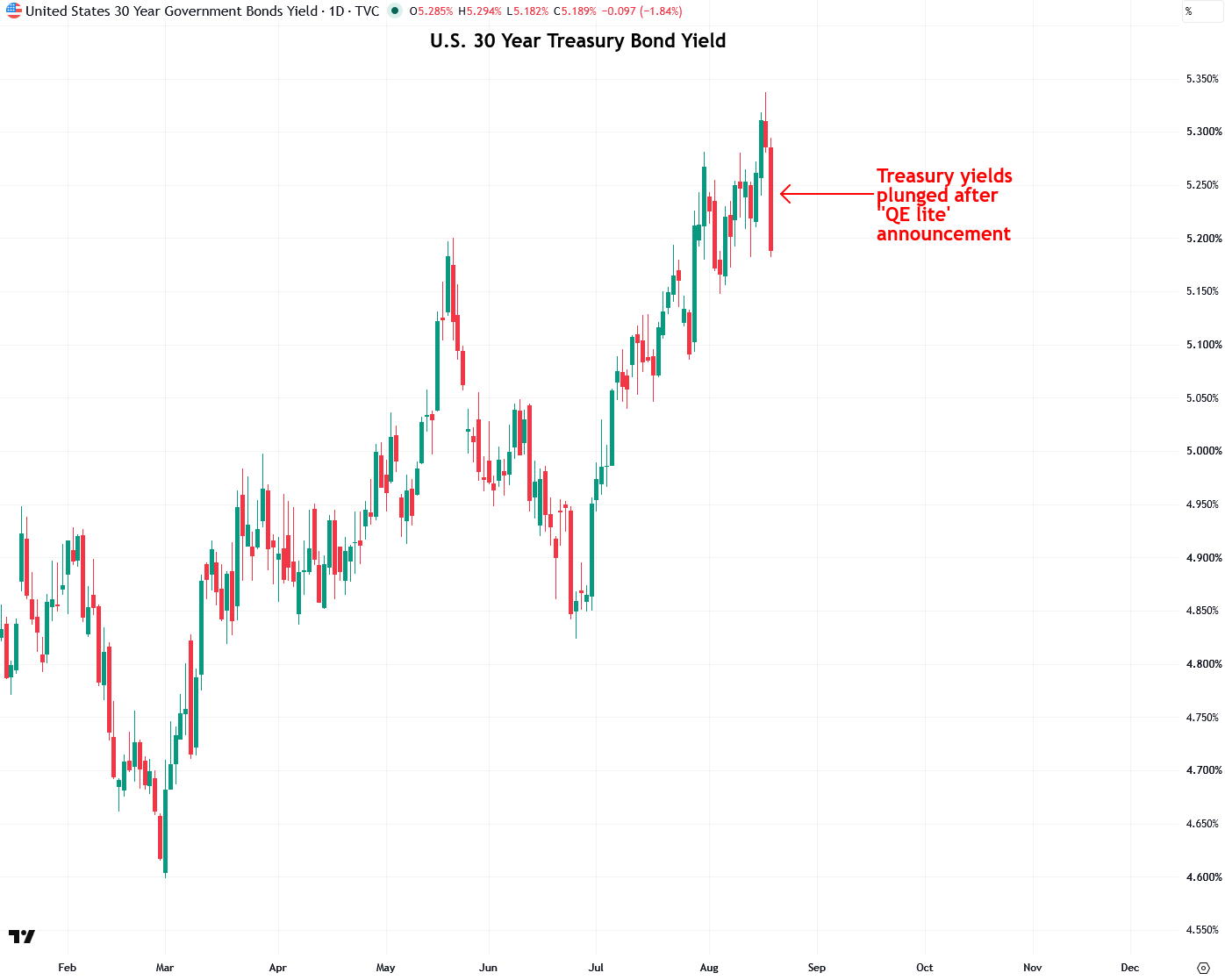
Since this morning’s announcement, there has been considerable speculation and debate over whether this expanded program should be considered a form of quantitative easing (QE), or what some have nicknamed “stealth QE” or “QE Lite,” involving the monetization of government debt (which debases the dollar), or whether the Treasury is merely attempting to change the maturity mix of government debt held by the public, rather than creating new money as the Federal Reserve does under traditional QE.