
A Closer Look at the Dollar
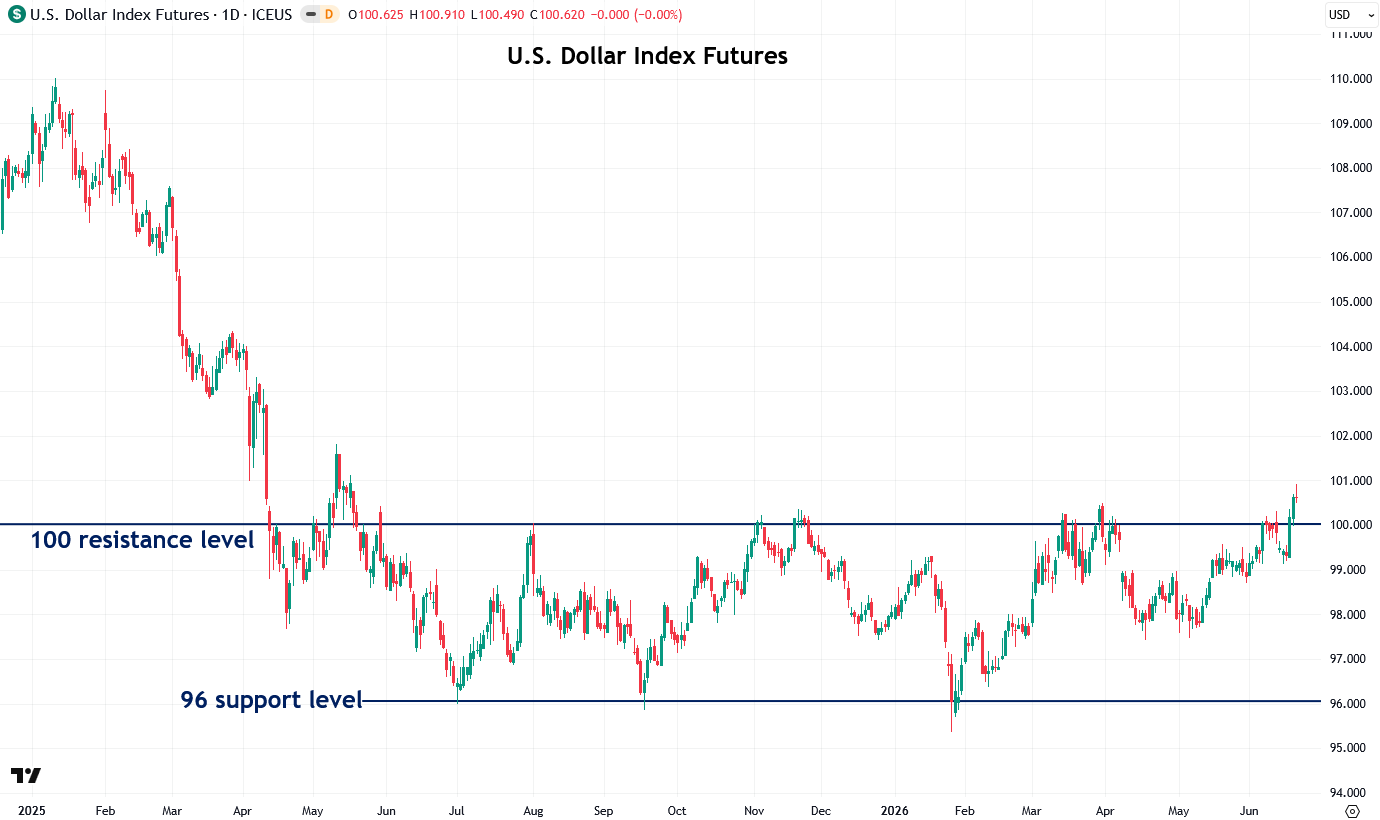
While the U.S. Dollar Index’s push above the key 100 psychological level is concerning, a true breakout has not yet been confirmed.

In my last update on Thursday, I showed how the U.S. Dollar Index broke out of its 96 to 100 trading range that had contained it over the past year. That breakout increased the probability of further near-term strength in the dollar, which would likely act as an additional headwind for precious metals and commodities that trade inversely to it.
As I took a deeper look at this setup over the weekend and had more time to think it through, however, I realized that a dollar rally is not necessarily a done deal just yet. There are several reasons for this that I want to highlight in today’s update, and additional confirmation will be needed before having confidence in calling for a sustained move higher in the dollar.
Let’s start with the chart of the U.S. Dollar Index over the past year. The index measures the dollar’s exchange rate against major currencies such as the euro, pound, and yen, though it is important to note that it does not reflect the dollar’s purchasing power.
The U.S. Dollar Index had been trading within a 96 to 100 range over the past year but finally closed above the key 100 resistance level on Thursday. The move followed Wednesday’s Fed meeting, where new Fed Chair Kevin Warsh struck a more hawkish tone than expected, increasing the odds of interest rate hikes and driving the dollar higher.
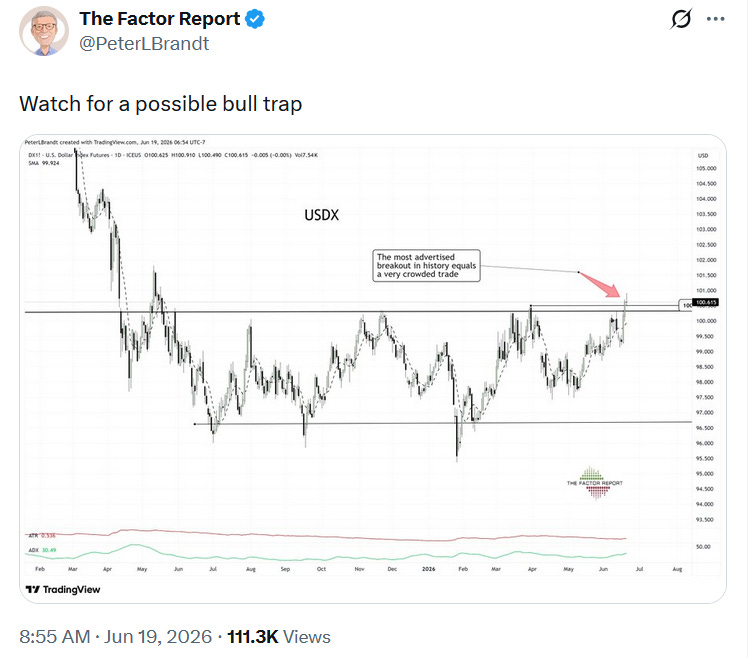
Although the Dollar Index breakout above 100 is concerning at first glance, as Peter Brandt, a highly experienced commodities trader, pointed out, it’s important to consider that this move could prove to be a bull trap. There are several reasons for this, including the fact that so many market participants are focused on that scenario, and what appears obvious often isn’t the case.
Although I will outline additional ways to confirm whether the Dollar Index breakout is genuine, one of the clearest signals of a potential bull trap would be if the index stalls, reverses, and falls back below the key 100 level.
Another scenario worth considering, as an X user, Colin Talks Crypto, pointed out to Peter Brandt, is that rather than trading within a neat range defined by parallel support and resistance, the Dollar Index may actually have been forming a megaphone/broadening pattern over the past year. If that interpretation is correct, then a true breakout from that pattern has not yet occurred.
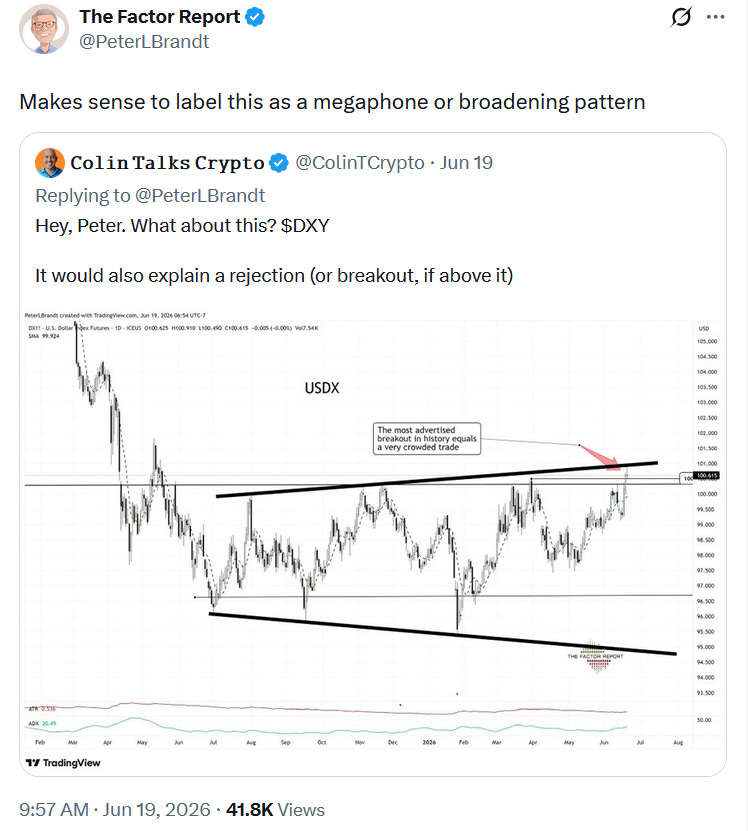
In the chart below, I redrew the support and resistance lines on the U.S. Dollar Index, and it does support the case that a broadening pattern has been forming and that a breakout has not yet occurred. This leaves open the possibility that the index could run into resistance just overhead and pull back once again, which would be the ideal outcome for those bullish on precious metals and commodities.