
An Exciting Opportunity in Basic Materials
Commodities & basic materials are the most ignored and undervalued assets on the planet, resulting in an “inverse bubble” that is going to culminate in a major inflationary surge over the next decade.

Today I’m kicking off a series of reports about the potentially highly lucrative opportunities I am seeing in the basic materials sector and related stocks and exchange-traded funds (ETFs). I’ll start with today’s report on the overall basic materials sector, followed by reports over the next few days covering the bullish opportunities I am seeing in key industry groups within basic materials, namely precious metals and copper mining stocks. I’ll also give my thoughts on the energy sector, which is closely related to basic materials but is classified as its own sector and is influenced by additional factors, particularly geopolitical ones.
I am well aware that this is an extremely broad topic and that entire books could be written about it, but the basic materials and commodities boom is rapidly heating up again, and I want to get this series of reports out as quickly as possible so subscribers who are interested can potentially take advantage of these opportunities while it is still early. For that reason, I have made this report as efficient as possible while still covering the overall gist of the topic and being as thorough as time allows.
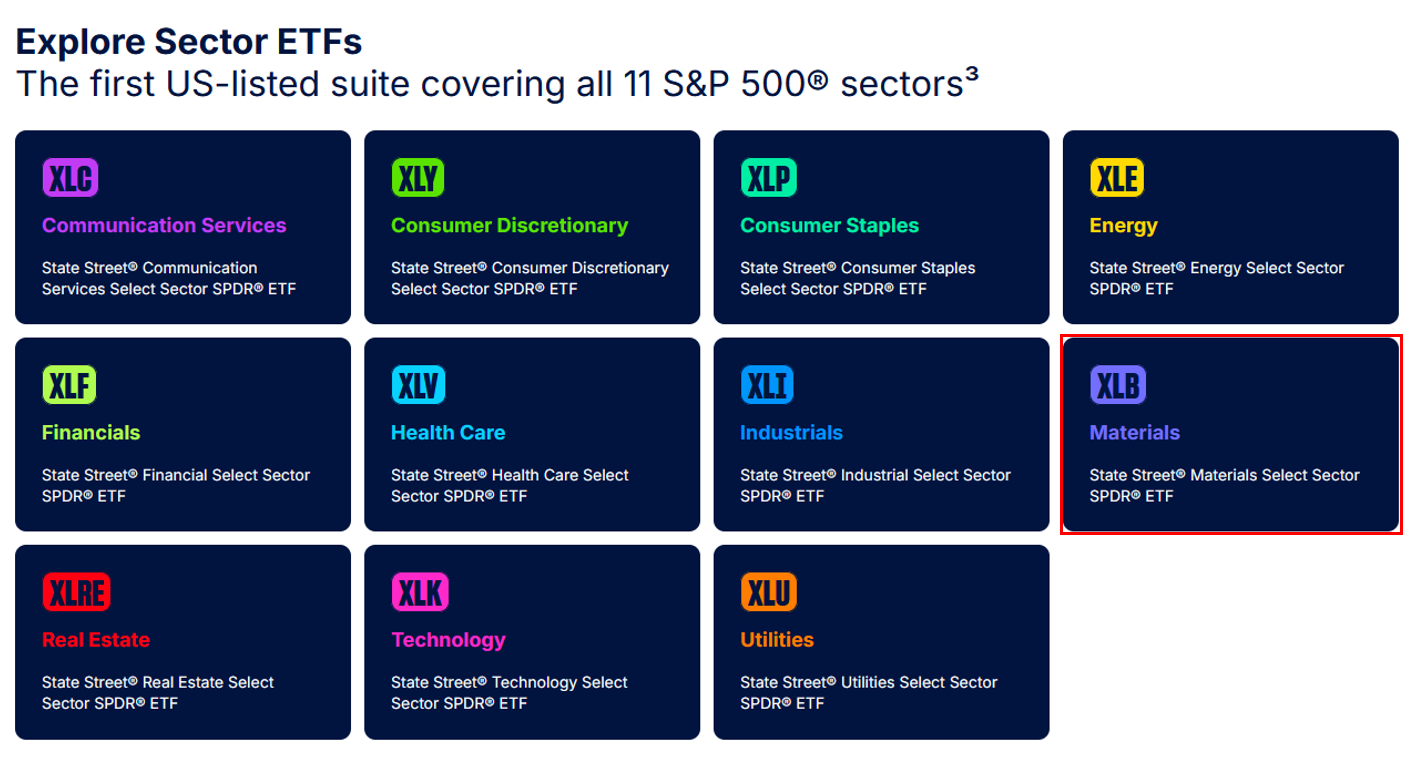
I want to start by explaining that although the broad U.S. stock market, as measured by the S&P 500, is often viewed as one single index or market, the reality is that it is comprised of 11 distinct sectors: communication services, consumer discretionary, consumer staples, energy, financials, health care, industrials, materials (or basic materials), real estate, technology, and utilities. Each sector has its own unique characteristics and tends to perform differently at various stages of the business cycle.
The screenshot below shows the 11 sectors of the S&P 500 along with the popular and highly liquid ETFs offered by State Street that track each one, making it very convenient to invest in a particular sector or theme:
Today’s report focuses on the basic materials sector, which is comprised of companies involved in the sourcing, processing, and distribution of raw materials. This includes commodities and materials such as copper, gold, silver, fertilizer, lumber, concrete, glass, and other building materials. In other words, basic materials is the sector where commodity and natural resource stocks are found, excluding energy, which is classified as its own separate sector.
Since I started this newsletter almost two years ago, I have been expecting a secular bull market in commodities over the decade ahead, also known as a commodities supercycle. I believe the boom in gold, silver, and their mining stocks that began in early 2024 kicked off that supercycle and was just a harbinger of an even greater boom in commodities and basic materials to come, similar to the powerful bull markets of the 1970s and 2000s.
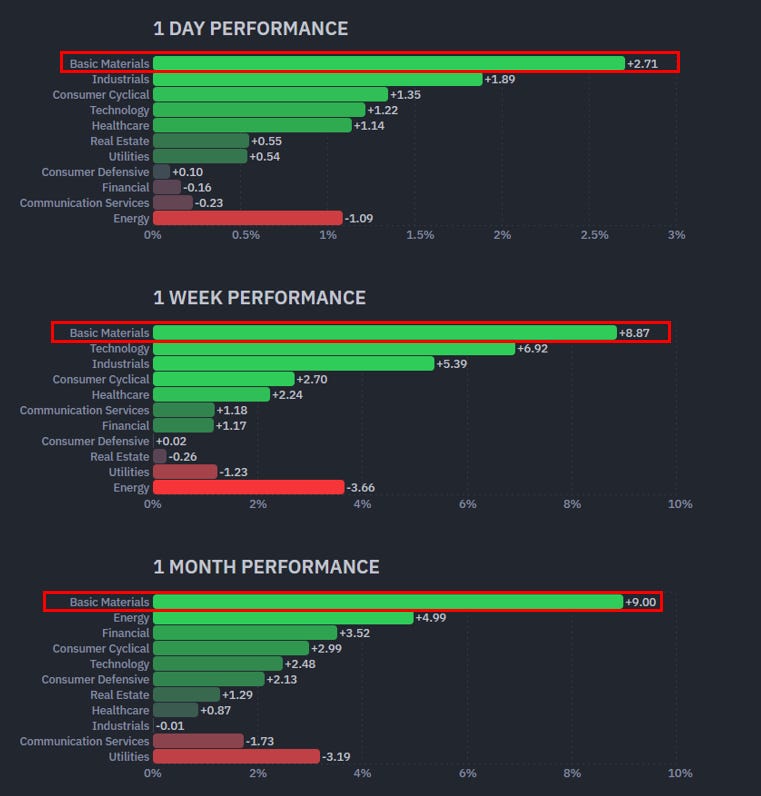
What has accelerated the timeframe and urgency of me kicking off this series of reports is what I am now seeing beneath the surface of the market. Technology stocks, particularly semiconductors, went from leading the stock market rally this spring to cooling off rapidly over the past month, while the best-performing sector over both the past month and the past week, as shown below, has actually been basic materials.
This sector is often considered boring and tends to fly under the radar, but it is now showing notable signs of strength and resilience as investors look beyond technology for bargains, promising new themes, and safe havens from tech volatility and overvaluation.
The most straightforward and easiest way to gain exposure to the overall basic materials sector is through the State Street® Materials Select Sector SPDR® ETF, which trades under the symbol XLB.
Of course, as I mentioned earlier, there are individual industry groups under the basic materials umbrella, including precious metals miners and base metals miners, which I will cover in separate reports in this series over the next few days. For today, however, my primary focus is XLB and the broader basic materials sector.
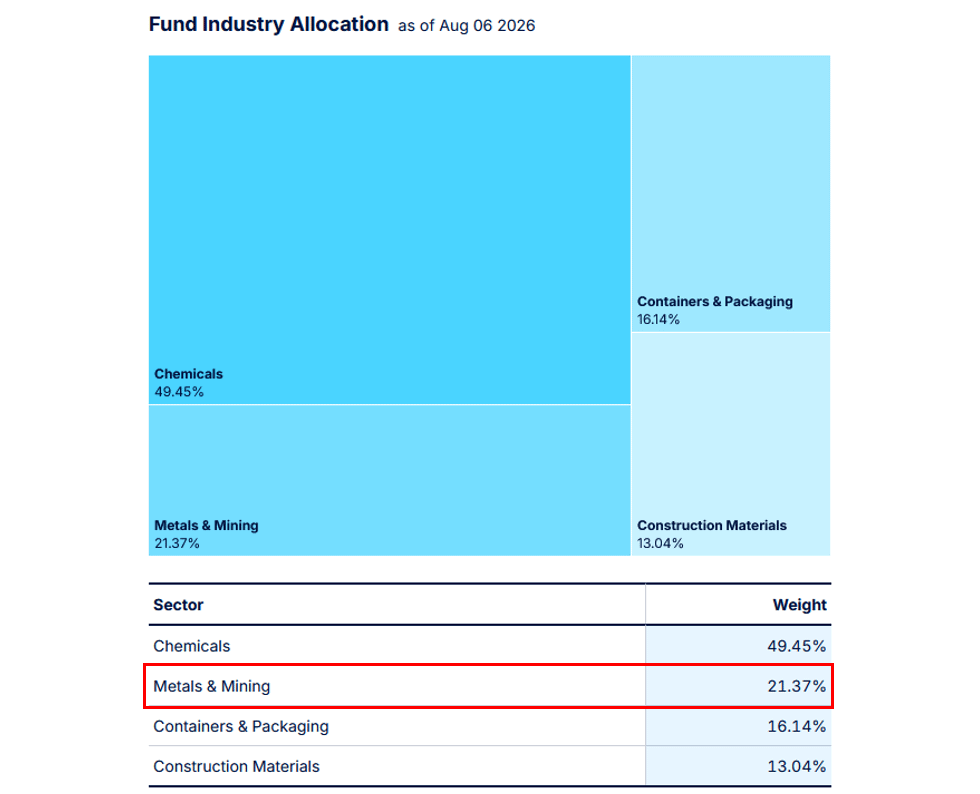
As shown in the graphic below, the XLB basic materials ETF is comprised of 49.45% chemicals-related stocks, 21.37% metals and mining stocks, 16.14% containers and packaging stocks, and 13.04% construction materials stocks:
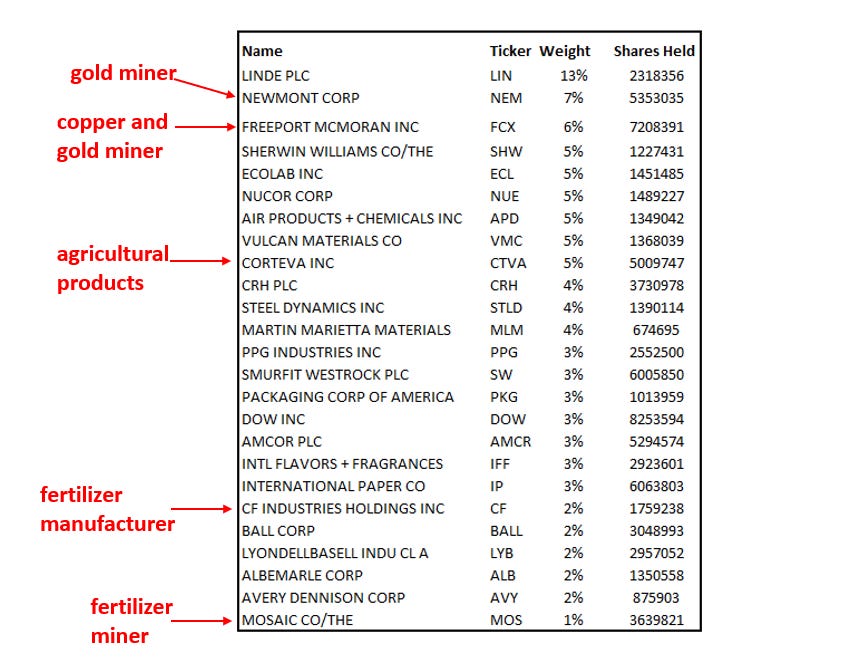
The table below shows the individual stocks held by the XLB ETF and their respective weightings. As you can see, its holdings include major gold and copper miners such as Newmont Corporation, the world’s largest gold mining company, and Freeport-McMoRan, one of the world’s largest publicly traded copper producers, along with several agricultural and fertilizer companies. I expect these types of companies to perform very well during the commodities supercycle of the next decade or so.
One of the benefits of investing in the basic materials sector is that it typically benefits from and acts as a hedge against inflation, which particularly appeals to me because I believe the inflation genie was let out of the bottle following the 2020 pandemic.
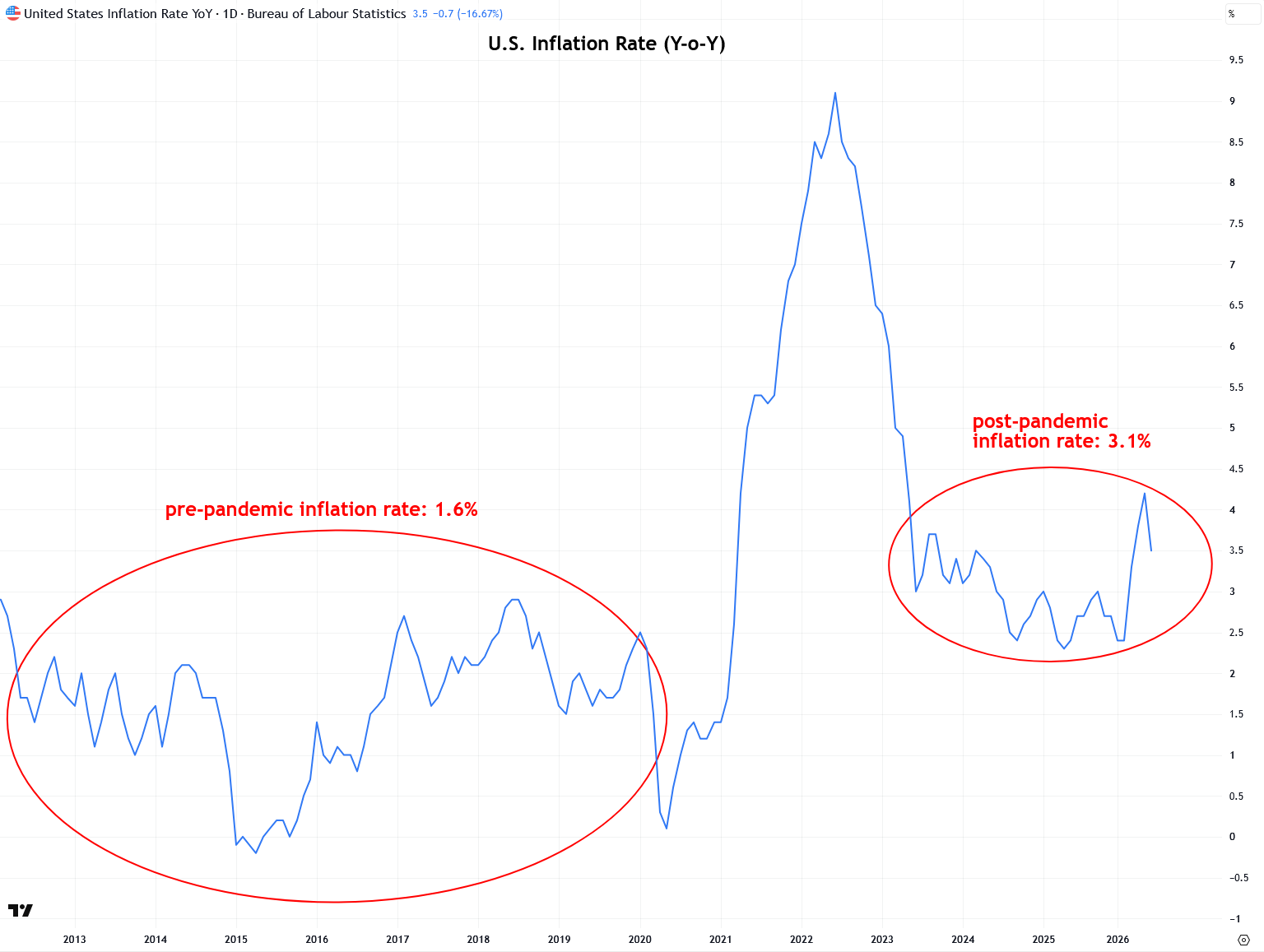
That can be seen in the U.S. inflation rate, as measured by the Consumer Price Index (CPI), which averaged just 1.6% during the pre-pandemic period from 2012 to 2019 compared with roughly 3.1% during the post-pandemic years from 2023 through mid-2026, nearly double the previous rate.
Inflation has remained persistently elevated, and I expect that trend to continue and even worsen in the years ahead as our heavily indebted government and society are increasingly forced to rely on various forms of money creation (or “digital money printing”) to remain propped up.
And, of course, there is good reason to believe that the CPI understates the true rate of inflation, as demonstrated by John Williams’s Shadow Government Statistics, which estimates inflation using historical methodologies and shows it running far hotter than today’s official figures.
With all the hand-wringing in our society over inflation, and ordinary people casting blame on the opposing political party, almost nobody focuses on its true root cause: the relentless expansion of the money supply, which steadily waters down and debases the currency.
As Nobel Prize-winning economist Milton Friedman famously stated, “Inflation is always and everywhere a monetary phenomenon, in the sense that it is and can be produced only by a more rapid increase in the quantity of money.”
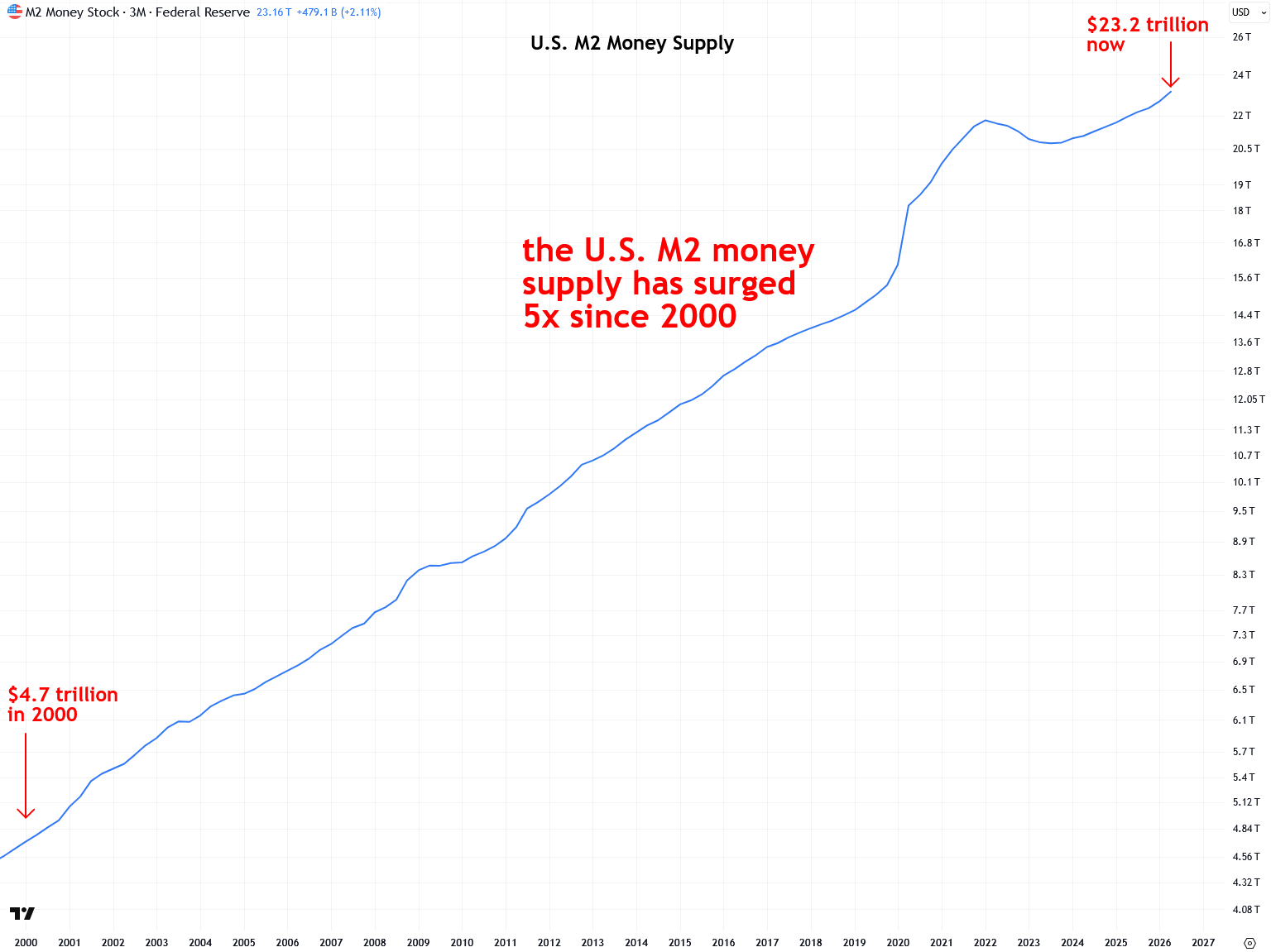
As the chart below shows, the U.S. M2 money supply has exploded roughly fivefold since 2000, soaring from just $4.7 trillion to $23.2 trillion today. There is no sign of this long-term trend letting up, and I actually expect it to accelerate in the years ahead, helping usher in another inflationary era similar to the 1970s, which was a tremendous period for commodities and basic materials while the rest of the stock and bond market stagnated.
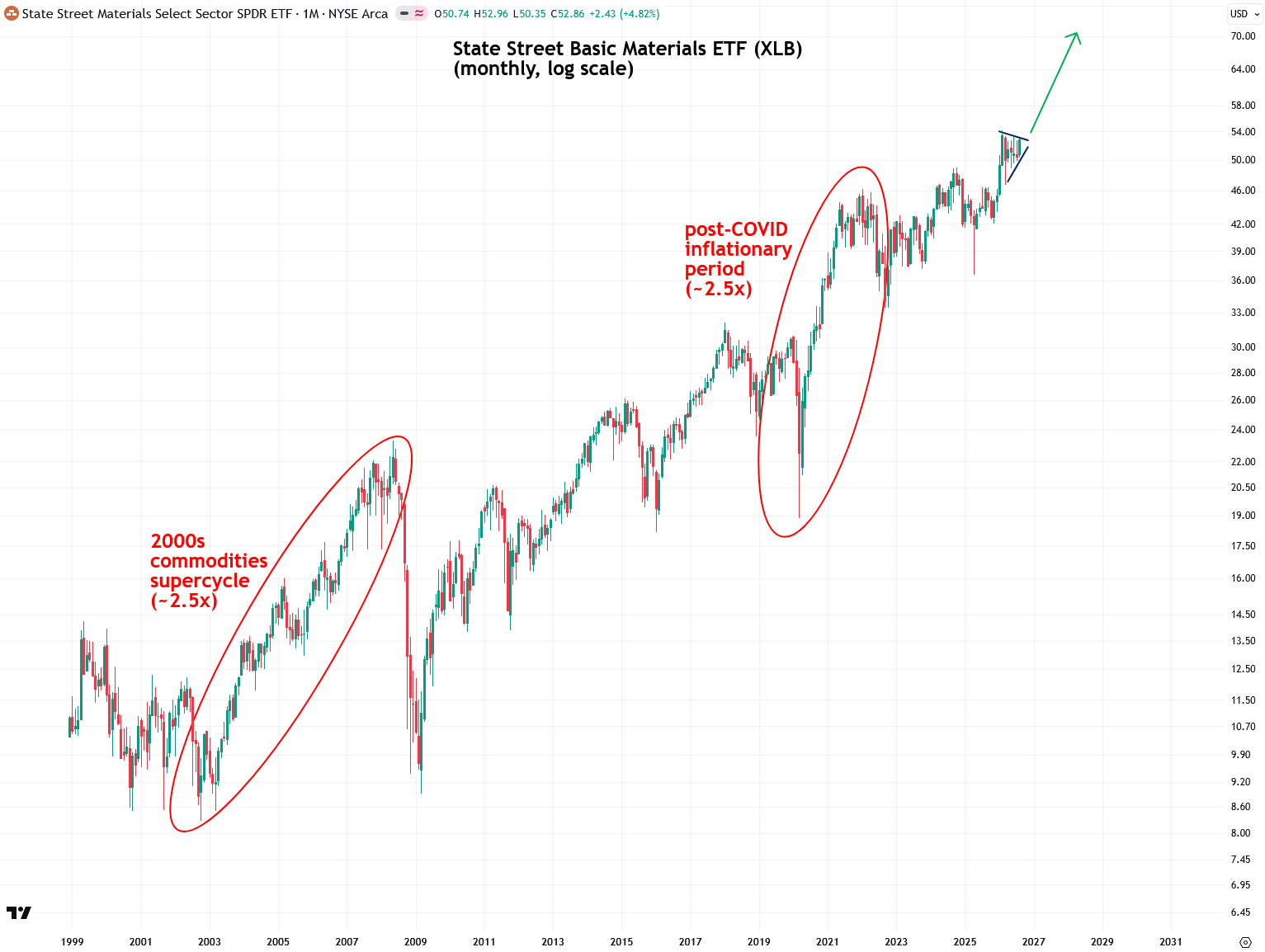
Now I want to show you the long-term chart of the XLB basic materials ETF since 2000. As you can see, it has been in a steady long-term uptrend, thanks to the relentless expansion of the money supply and resulting inflation, with particularly powerful booms during the 2000s commodities supercycle and the post-COVID inflationary years. XLB rose roughly 2.5-fold during both episodes, and after several years of largely treading water, I believe another similar boom is ahead.
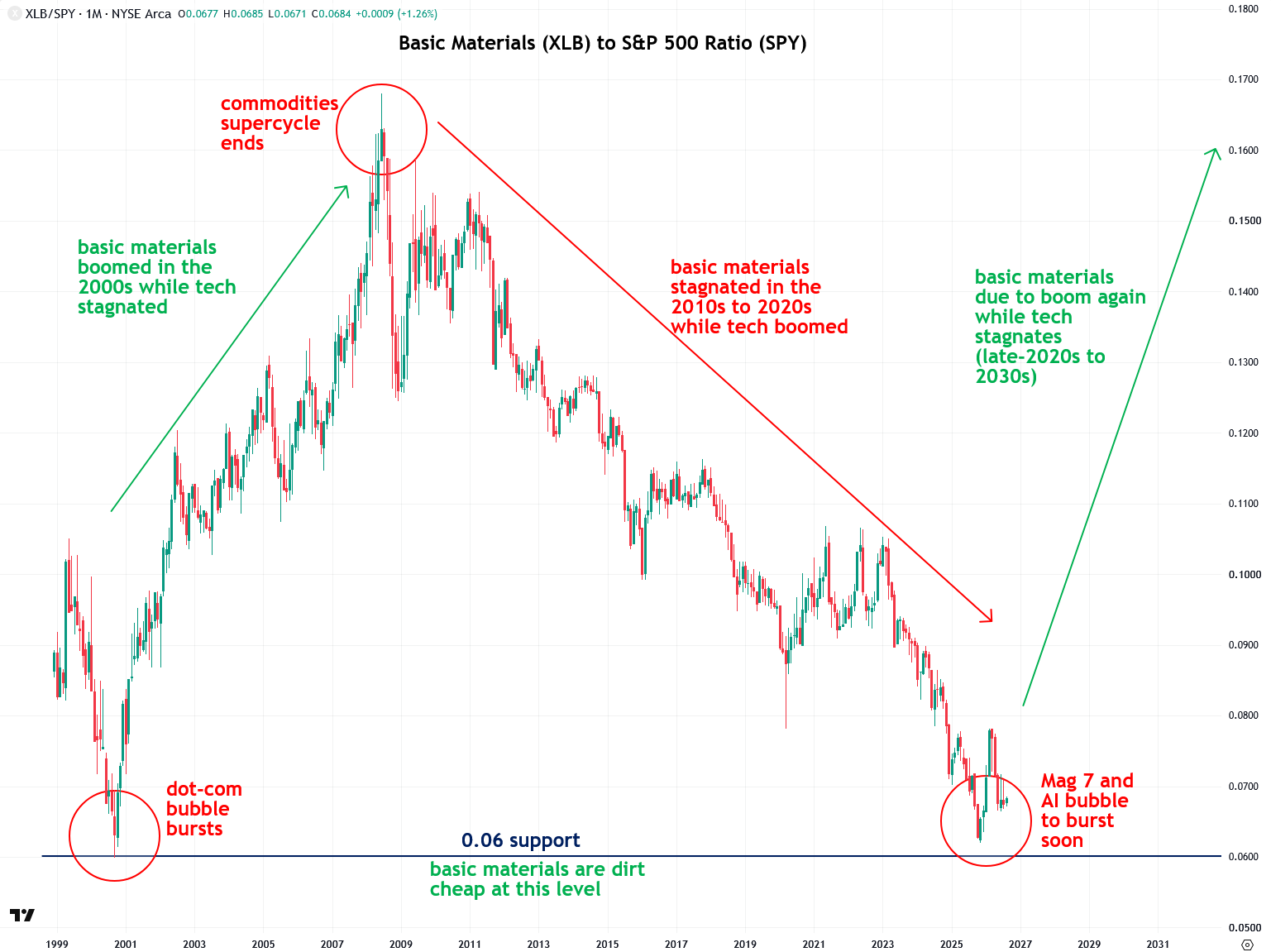
So while the basic materials sector has clearly risen over time, the reality is that it has actually lagged the overall stock market, as measured by the S&P 500, for roughly the past 17 years. As shown in the chart below of the ratio between the XLB and SPY ETFs, that prolonged underperformance has left basic materials at its cheapest level relative to the broad stock market since the peak of the dot-com bubble in 2000.
The fact that the basic materials sector is now at its cheapest level relative to the broad stock market since 2000 is no coincidence. We were in a massive tech bubble back then, and I believe we are in another tech bubble today, this time centered on the Magnificent Seven and AI-related stocks.
During technology booms and bubbles, basic materials and commodities typically lag as capital pours into tech-related investments. But when those tech booms end—and they always do—capital flows back into basic materials and commodities, fueling powerful supercycles that typically last around a decade.
While I have focused so far on the XLB basic materials ETF, I also want to show the most well-known commodities index, the Goldman Sachs Commodity Index (GSCI), because the same bullish setup can clearly be seen there as well, further confirming what I am seeing in XLB. Note: the GSCI includes energy-related commodities while the XLB basic materials ETF does not include energy.